A shift in strategy: How diversification fuelled Nanak Farms’ growth
209 / 240
Authors
 Sarvpriya Singh
 Farm Advisory Service Centre (Punjab Agricultural University), Gurdaspur, Punjab 143 521
Keywords:
Crop diversification, Farm profitability, Protected cultivation, Sustainable agricultureAbstract
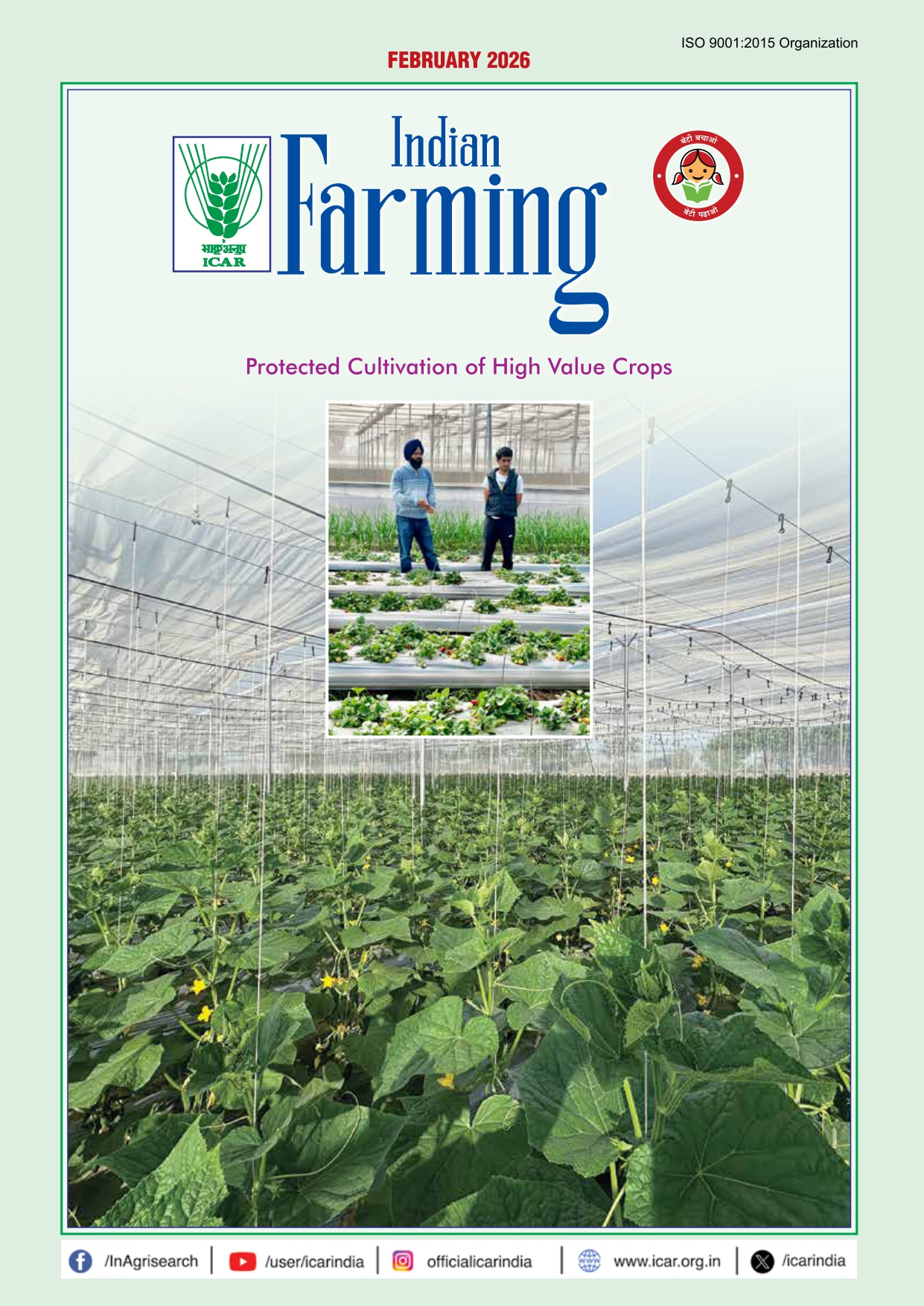
This case study documents the transformation of Nanak Farms, located in Kaljharani village of Bathinda district, Punjab, from a conventional cereal-based farming system to a diversified, high value cash crop enterprise. Under the leadership of farmer-cum-entrepreneur Ravdeep Singh, the farm transitioned from rice–wheat cultivation to the adoption of strawberries, parthenocarpic
cucumbers, potato, tomatoes, and other vegetables through open-field and protected cultivation systems. The study highlights the role of innovation, resilience, and informed decision-making in overcoming financial, climatic, and market-related challenges. High-value crops such as strawberry and parthenocarpic cucumber significantly enhanced farm profitability. The overall benefit-cost
ratio improved from 2.8 under conventional crops to 3.0 after diversification, demonstrating superior economic efficiency. Integration of beekeeping for pollination, adoption of organic practices, efficient water management, and direct marketing strategies further strengthened sustainability and income stability. The findings underscore the immense potential of crop diversification, protected
cultivation, and institutional support in improving farm income, resilience, and resource-use efficiency.
Downloads
Downloads
Published
Issue
Section
License
Copyright (c) 2026 Indian Farming

This work is licensed under a Creative Commons Attribution-NonCommercial-ShareAlike 4.0 International License.
Complete copyright vests with the Indian Council of Agricultural Research, who will have the right to enter into an agreement with any organization in India or abroad engaged in reprography, photocopying, storage and dissemination of information contained in it, and neither author nor his/her legal heirs will have any claims on royalty.


