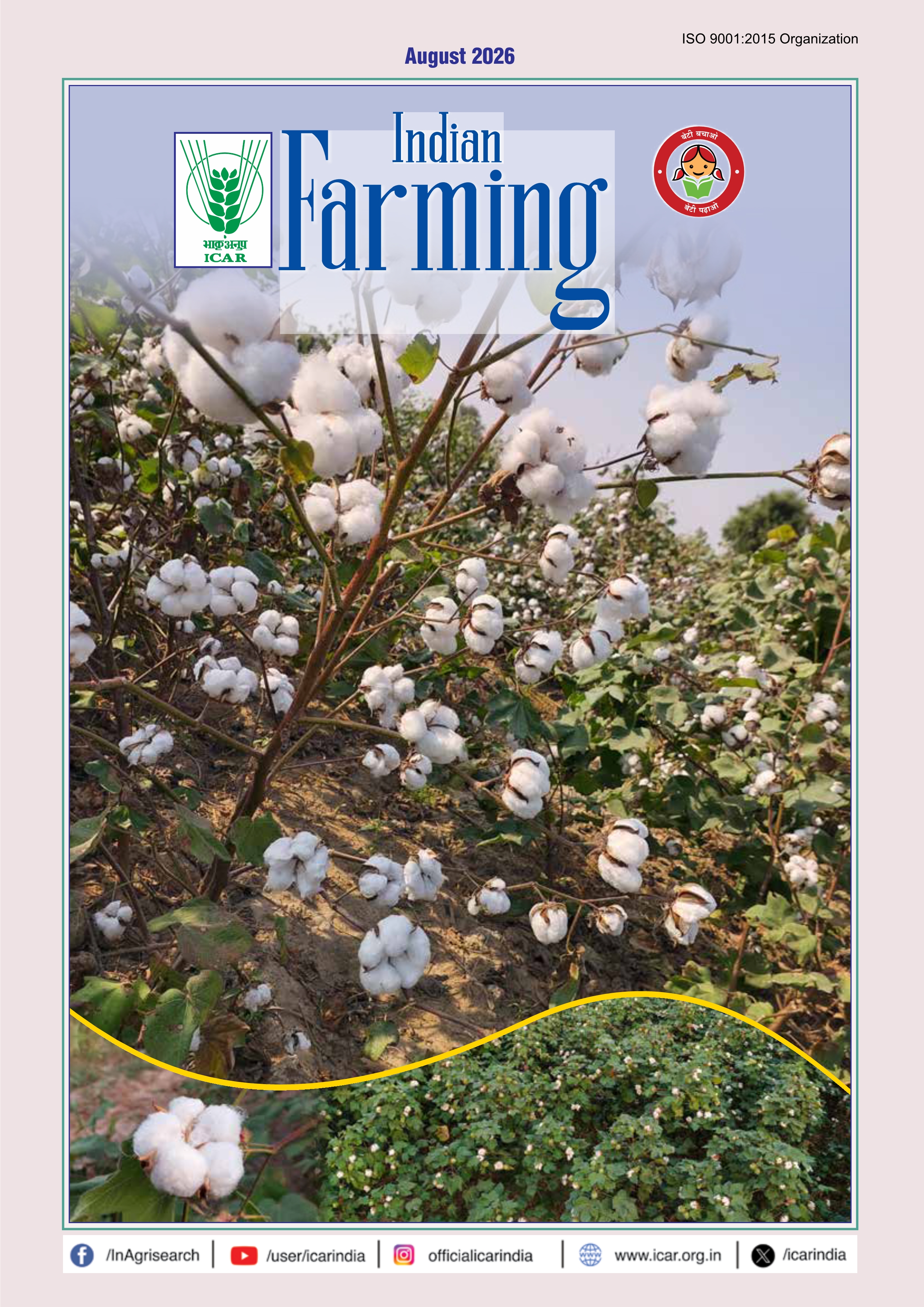
Holistic management strategies of pink bollworm in Bt cotton in north cotton growing zone of India
0 / 0
Authors
 Satpal Singh
 ICAR-Central Institute for Cotton Research, Regional Station, Sirsa, Haryana 125 055
Keywords:
Cotton bollworm, Oligophagous, Pyrethroids, Rosette flowerAbstract
Cotton is one of the most remunerative crops of the northern zone after rice and is an economically important cash crop in the states of Haryana, Punjab and Rajasthan. The major limiting factors in cotton productivity are insect-pests, diseases, prolonged drought stress, excessive rains and poor nutrition management, especially the cotton bollworm. The double gene (Cry1Ac+Cry2Ab) Bt cotton, Bollgard-II (BG-II), was approved for cultivation in all cotton growing zones of India during 2006 as a resistance management strategy since stacked genes (Cry1Ac+Cry2Ab) act synergistically and become more toxic to cotton bollworm (Helicoverpa armigera) as well as other lepidopteran pests that include spotted bollworm (Earias vittella), spiny bollworm (Earias insulana), and pink bollworm (Pectinophora gossypiella). Among bollworms, pink bollworm acquired resistance to BG-I and BG-II cotton due to its feeding behaviour and after its reappearance, it became a serious concern. Therefore, proper understanding and knowledge about the lifecycle, survival during season and off-season, integrated management of the pest is essentially required to further boost the sustainable cotton production in the country.
Downloads
Downloads
Published
Issue
Section
License
Copyright (c) 2026 Indian Farming

This work is licensed under a Creative Commons Attribution-NonCommercial-NoDerivatives 4.0 International License.
Complete copyright vests with the Indian Council of Agricultural Research, who will have the right to enter into an agreement with any organization in India or abroad engaged in reprography, photocopying, storage and dissemination of information contained in it, and neither author nor his/her legal heirs will have any claims on royalty.


